Operations
Process improvement: fix the work before you automate it
Automating a broken process makes it fail faster. How to find where work really stalls, the five levers of efficiency, and when outside help pays.
In this article
When a team is overloaded, the instinct is to add people or buy software. Often the better answer is in how the work flows. Most wasted time isn’t in the tasks; it’s between them: waiting for approval, chasing missing information, re-typing data from one system into another, and fixing errors that crept in along the way.
Process improvement finds those delays and removes them. It is also the step that makes automation and AI pay off, because automating a broken process just makes it fail faster.
What is operational efficiency?
Doing the work customers value with the least time, cost and error. An efficient process is predictable: the same request gets the same result in roughly the same time, whoever handles it.
Where does time actually go?
When we map processes with the people who run them, the same culprits appear:
- Hand-overs between teams, where work waits in an inbox.
- Re-keying data from email or one system into another.
- Approvals that need more people than the risk justifies.
- Missing information at the start, which causes back-and-forth later.
- Rework to fix errors that a check earlier would have caught.
- Workarounds that grew up because a system didn’t quite fit.
What are the five levers of process improvement?
1. Redesign the structure
Sometimes the problem is who does what. Moving a step to the team that has the information, or giving one person end-to-end ownership of a case, can remove whole hand-overs.
2. Improve communication
Clear request forms, agreed service levels between teams and a single place to see the status of each case cut chasing and duplicate work.
3. Get data right at the source
Capture information once, correctly, at the start: validated forms, required fields, picklists instead of free text. Every later step gets easier. See data analytics for growing companies.
4. Tighten procurement and supply
For operations-heavy businesses, supplier lead times, approval rules and stock levels are processes too, and often the biggest source of delay.
5. Standardise, then automate
Once the process is simple and consistent, automate the repetitive steps: data entry, routing, reminders, reports and hand-overs between systems. Our business process automation guide covers how to choose what to automate.
How do you run a process improvement project?
- Pick one process with a clear cost, such as order to cash, quote to contract, or employee onboarding.
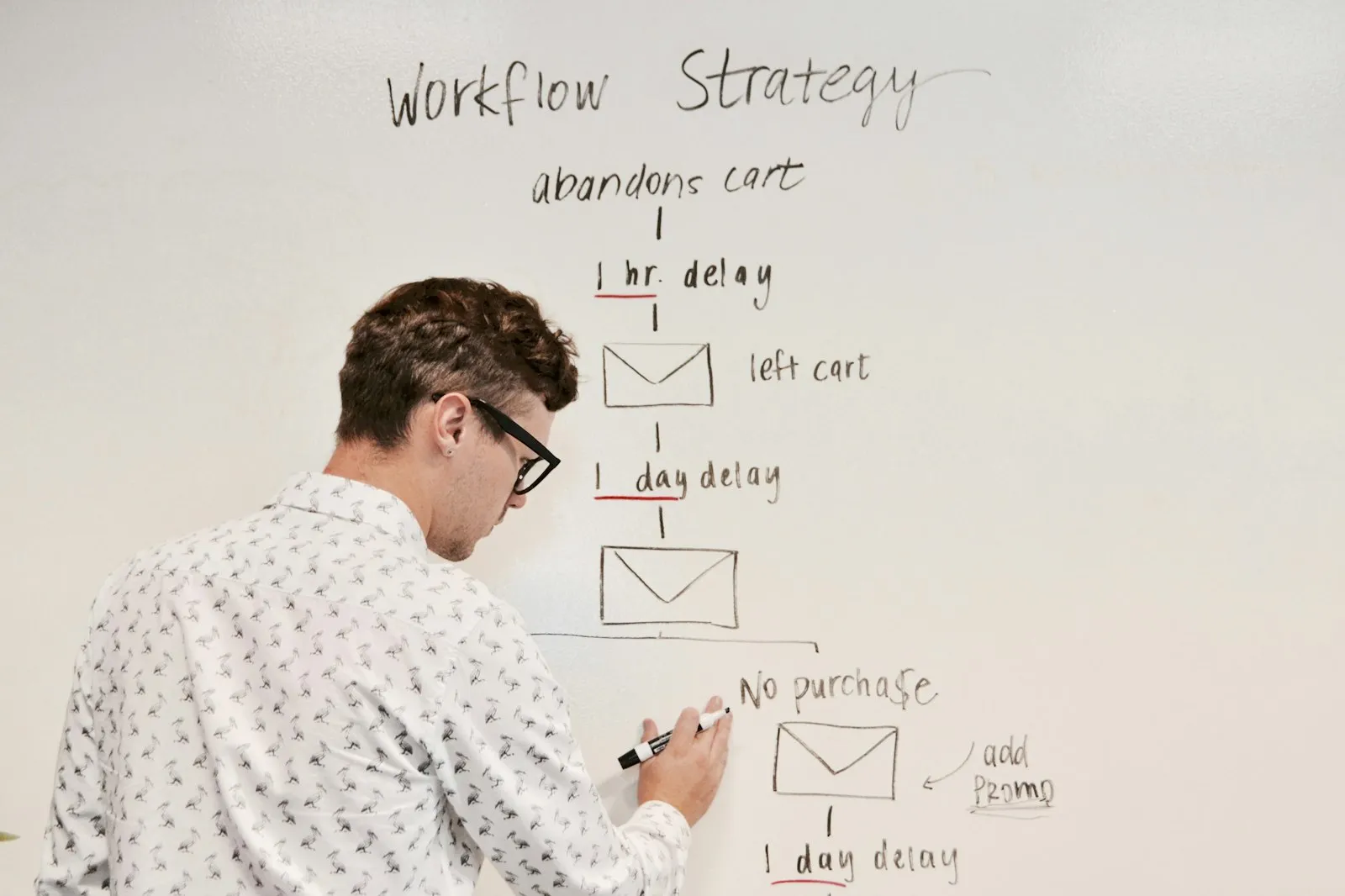
- Map it as it really runs, with the people who do it, including the workarounds.
- Measure the baseline: cycle time, hours per case, error or rework rate.
- Remove and simplify: cut steps that add nothing, reduce approvals, fix data capture.
- Standardise: write down the new way, train people, and update system settings to match.
- Automate what remains repetitive.
- Measure again, and keep a small set of measures on a dashboard so gains don’t slip back.
When does outside help pay off?
People inside a process rarely see its quirks; they’ve learned to live with them. An outside view brings fresh questions, experience of what has worked elsewhere, and the time to do the mapping properly while your team keeps the business running. It pays off most when the process crosses several teams, when nobody owns it end to end, or when automation is planned and you want to get the design right first.
Where to start
If your team is drowning in manual work, our AI Implementation & Automation work starts by mapping and simplifying the process, then automates what doesn’t need a person. Tell us where you’re stuck and we’ll look at your most painful process first.
Questions
What is process improvement?
Finding and removing the delays, errors and unnecessary steps in how work gets done, so it takes less time and effort and produces better results. Methods range from simple process mapping to Lean and Six Sigma.
What does a process improvement consultant do?
They map how work actually flows, measure where time and errors occur, recommend and help make changes, and often set up automation and reporting. An outside view helps because people inside a process rarely see its quirks.
What are the steps to improve operational efficiency?
Pick a process with a clear cost, map it as it really runs, measure it, remove and simplify steps, standardise what remains, automate the repetitive parts, then measure again and keep improving.